Facilitating online webinars for faculty at Georgetown University.
Role Summary
Co-facilitator tasked with designing, developing, and facilitating webinars for teaching learning technologies and pedagogy to faculty at Georgetown University. Broke new ground for faculty development approaches within digital environments, and went on to design and facilitate webinars on a range of topics associated with learning technologies and digital learning.
Development Summary
- Client: Faculty at Georgetown University
- Deliverable: Webinar
- Tools Used: Google Apps, Zoom, WordPress, Panopto, Canvas
- Time in Development: Approximately 15 hours per webinar (includes research, design, development, facilitation)
Background
Traditionally, most of the faculty development work at Georgetown has occurred within in-person workshops, individual consultations, and group-centric programs in person.
When the opportunity came up to experiment with offering online workshops for learning technologies, I was asked to co-facilitate the first workshop on “Georgetown Domains”, a service offering faculty web hosting and development tools. Since then, I’ve been asked to facilitate several online webinars and workshops with varying degrees of formality.
Process
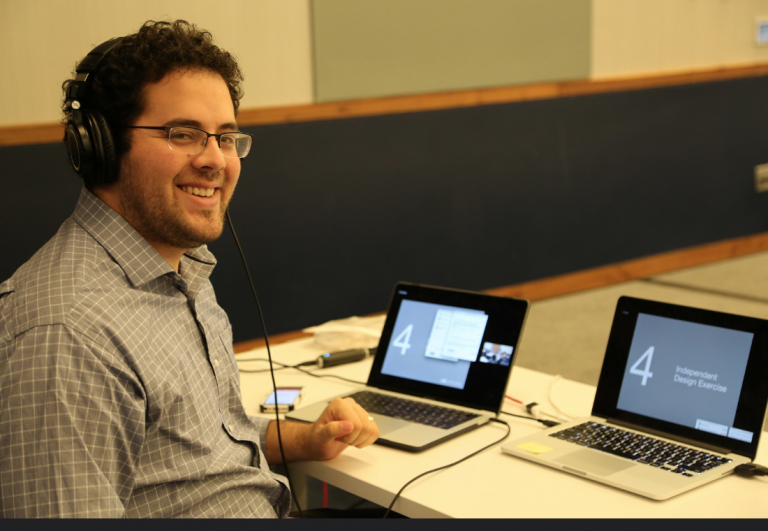
For these early webinars, the design process was exciting as it involved a combination of not only developing the webinars themselves, but also experimenting with workflows and deliverables that would scale effectively for future facilitators.
Our process ended up relying on close communication between team members surrounding the following priorities:
- A shared design document used to coalesce around ideas and then shape them into learning objectives, corresponding resources and materials, and subsequent project management.
- Deeper research into the affordances and constraints of our learning technologies, and analysis of how and where those technologies are being used by people in the university community.
- Adherence to an agreed upon timeline for project management and communications.
- A shared slide-deck used to further refine the agenda, rehearse, and then facilitate the webinar.
- The creation and curation of relevant resources for the topic of each webinar.
- One or two practice sessions to coordinate teaching styles and technologies used.
Outcomes & Lessons Learned
You can take a look at a recording for each of the sessions below. Attendance by unique faculty and staff members for these live sessions has ranged from the mid twenties to the mid-seventies. Feedback from faculty after the webinar universally indicated these sessions to be helpful primarily in helping them learn principles for why and when they would use these technologies, as well as where they could find resources for next steps. All survey respondents indicated that these sessions were either “very helpful” or “helpful”.
A few indicated that these sessions were helpful for orienting themselves to the technology, but that they would want more specific topics covered as well. In future webinars, I will be advocating for shorter, more frequent webinars in between these longer ones that are more focused on either advanced use-cases or else include more “how-to” learning objectives.
"Teaching and Learning with Domains"
Learn more at the follow-up blog post for this webinar.
"Teaching with Zoom"
Learn more at the follow-up blog post for this webinar.
"Engaging Students with Video Using Panopto"
Learn more at the follow-up blog post for this webinar.
